
The Complete Guide to EV Chargers in Europe
The Complete Guide to EV Chargers in Europe

How to Choose the Right Home Charger
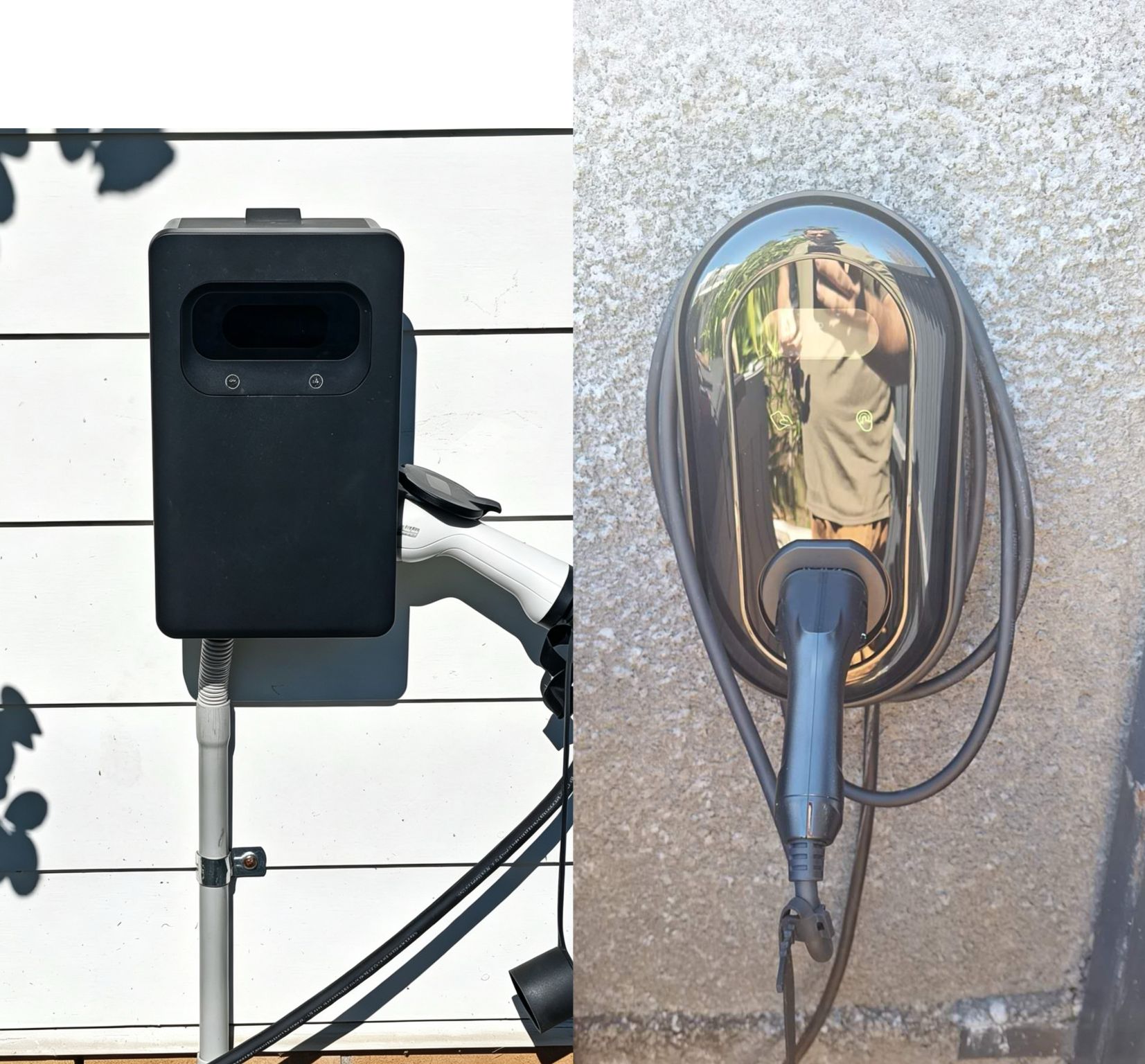
Electric vehicles are becoming an increasingly important part of Europe’s transport landscape. As more drivers switch from petrol and diesel cars to electric vehicles, convenient, reliable and efficient charging solutions are becoming essential for everyday mobility.
For many EV owners, home charging is one of the most practical ways to keep their vehicles ready for daily journeys. However, choosing the right charger involves more than comparing prices or charging speeds. Electrical supply, vehicle compatibility, installation conditions, smart charging functions and future energy needs all play an important role.
In this guide, FUDA EVSE explains the key things European EV owners, installers and distributors should know when choosing an electric vehicle charger.
| QUICK TAKEAWAY
Choose a charger based on your vehicle’s AC charging capability, the property’s electrical supply, installation conditions and the smart functions you will actually use. |
1. Understanding EV Charging in Europe
Before choosing a charger, it is important to understand the main charging options available in the European market.
AC Charging: A Practical Choice for Everyday Use
AC charging is widely used for residential properties, workplaces, hotels and other locations where vehicles remain parked for several hours.
An AC wallbox supplies alternating current to the vehicle. The vehicle’s onboard charger converts it into direct current for the battery.
Common residential AC wallbox power ratings include:
- 7.4kW for single-phase installations.
- 11kW for three-phase installations.
- 22kW for compatible three-phase installations.
The actual charging power depends on the vehicle’s onboard charger, the available electrical supply, the installation and any configured charging limits.
For drivers who park overnight or remain at work for several hours, an AC wallbox can provide a convenient daily charging solution.
DC Charging: When Higher Charging Power Is Needed
DC chargers convert AC electricity into DC before supplying power to the vehicle battery.
They are commonly used at public charging stations, motorway service areas, commercial charging hubs and fleet depots where shorter charging stops are important.
Depending on the charger and vehicle, DC charging equipment can deliver substantially higher power than residential AC chargers.
For most home charging applications, however, an AC wallbox is a practical starting point.
2. Type 2 Connectors and European EV Compatibility
The Type 2 connector is widely used for AC charging in Europe and is the standard connector type for many European AC charging installations.
When choosing an AC wallbox, check the following:
Connector compatibility:Confirm that the charging connector matches the vehicle or charging cable.
Charging power: Check the maximum AC charging power supported by the vehicle.
Electrical supply: Determine whether the property has single-phase or three-phase electricity.
Installation requirements: Make sure the charger and electrical installation are suitable for the intended location.
A charger rated at 22kW will not automatically charge every vehicle at 22kW. The vehicle’s onboard charger and the available power supply may limit the actual charging rate.
For distributors and installers, offering different power ratings and cable configurations can help meet the needs of different vehicle models and residential installations.
3. 7.4kW vs. 11kW vs. 22kW: Which EV Charger Should You Choose?
One of the most common questions from EV owners is which charging power is right for their home.
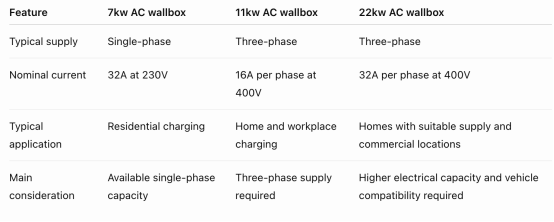
The following table provides a general comparison.
These are nominal ratings. Actual output may vary with voltage, phase configuration and charging limitations.
Is 7.4kW Enough for Home Charging?
For many households with single-phase electricity, a 7.4kW wallbox offers a useful balance between charging speed and installation requirements.
It can be suitable for overnight charging, provided the vehicle and electrical installation support the required power.
When Should You Consider an 11kW Charger?
An 11kW charger can be a good option for households with three-phase electricity and vehicles capable of accepting 11kW AC charging.
It can also suit workplaces, residential developments and other locations where vehicles remain parked for several hours.
Is a 22kW Wallbox Always Better?
Not necessarily.
A 22kW wallbox can offer higher AC charging power, but only when the electrical installation and vehicle support it. Many vehicles have onboard AC chargers with lower maximum power ratings.
Before selecting a 22kW model, check the available supply capacity, installation cost and vehicle specifications.
The best charger is the one that matches the user’s actual charging needs, rather than simply the one with the highest rated power.
4. Smart EV Chargers: More Than Just Charging
Modern smart EV chargers can offer features that make daily charging more convenient and help users manage electricity consumption.
Depending on the model, these functions may include:
App Control
A connected charger may allow users to start or stop charging, monitor charging status and adjust available charging settings through a mobile application.
Scheduled Charging
Users can set charging schedules to take advantage of suitable electricity tariffs or fit charging around their daily routines.
Actual savings depend on the user’s electricity contract, charging habits and local energy prices.
Adjustable Charging Current
Current adjustment can help users adapt charging to the available electrical capacity, provided the charger and installation support the selected settings.
Wi-Fi and Bluetooth Connectivity
Wi-Fi and Bluetooth can provide different ways to connect a charger to a mobile device or home network. The available functions depend on the product and its software.
Remote Software Updates
Some smart chargers support over-the-air software updates, allowing supported firmware improvements to be delivered without replacing the hardware.
For homeowners, these features can make charging easier to manage. For distributors and installers, smart functionality can also help differentiate products in a competitive market.
5. Dynamic Load Balancing: Making Better Use of Available Power
Dynamic load balancing helps manage the power used by an EV charger alongside other electrical loads in a building.
Consider a home where an EV charger, oven, air conditioner and other appliances operate at the same time. If their combined consumption exceeds the available electrical capacity, the installation may experience an overload or protective devices may trip.
A compatible dynamic load balancing system measures or receives information about the building’s electricity consumption and adjusts EV charging power accordingly.
For example:
When household consumption increases, the charger reduces its power.
When other appliances switch off, more capacity may become available for EV charging.
The system continuously adjusts charging within its configured limits.
This can help make better use of an existing electrical connection and may reduce the need for a supply upgrade.
However, dynamic load balancing is not a substitute for correct circuit design, electrical protection or professional installation. It also requires compatible hardware, metering equipment and system configuration.
When evaluating a smart wallbox, check whether load balancing is integrated or requires additional accessories.
6. Solar EV Charging: Using More of Your Own Energy
For households with photovoltaic solar panels, charging an EV with self-generated electricity can be an attractive option.
When solar generation exceeds the property’s immediate electricity consumption, surplus energy may be available for vehicle charging.
A compatible solar charging system can help direct this energy to the vehicle, potentially increasing self-consumption and reducing reliance on grid electricity.
There are several factors to consider:
Solar generation changes throughout the day and across seasons.
Household electricity consumption can fluctuate.
The charger may need a compatible energy meter or communication system.
Solar surplus charging functions vary by charger, inverter and energy management system.
Not every smart charger automatically supports solar surplus charging. Before purchasing, verify the required hardware, communication protocols and compatibility with the existing photovoltaic installation.
For customers planning to add solar panels in the future, choosing a charger with suitable expansion or integration options may offer additional flexibility.
7. EV Charger Installation in Europe: What Should You Check?
Installation requirements vary between European countries and can also depend on the building, electrical supply and type of installation.
Before installing a home EV charger, consider the following factors.
Electrical Capacity
An electrician should assess the available supply capacity, existing circuits, earthing arrangements and the additional load created by the charger.
Three-phase power may be needed for 11kW or 22kW charging, depending on the local supply configuration.
Electrical Protection
The installation must have appropriate overcurrent and residual-current protection.
The required protection depends on the charger’s built-in protective functions, the installation design and applicable national regulations. For example, the required residual-current protection arrangement must account for the possibility of DC residual current.
Do not assume that the same protection configuration is suitable for every charger or country.
Indoor or Outdoor Installation
Consider the installation location, exposure to rain and dust, ambient temperatures and the risk of physical damage.
Check the product’s specified IP rating and permitted operating temperature range. The installation must also follow the manufacturer’s instructions.
An IP rating should not be interpreted as permission to install equipment in every environment or to expose connectors to conditions outside their rated use.
Cable Routing and Parking Location
The distance between the electrical distribution board and the parking space can affect cable requirements, installation work and total cost.
Apartments and shared parking facilities may also require additional planning, permissions or coordination with the property manager.
National Regulations and Incentives
European countries have different electrical installation rules, administrative requirements and financial incentives.
For example, in Italy, the 2026–2030 Bonus Colonnine Domestiche programme provides financial support for eligible home EV charging installations. The scheme covers 80% of eligible purchase and installation costs, up to €1,500 for individuals and €8,000 for installations in shared areas of condominium buildings. Eligibility requirements apply, including technical requirements for the charging equipment. For the 2026 funding round, applications are scheduled to be accepted from 22 September 2026 to 31 January 2027, subject to available funds and the official application rules. Before purchasing or installing a charger, check the latest guidance from the Italian Ministry of Enterprises and Made in Italy (MIMIT) and Invitalia.
Always consult a qualified installer familiar with the requirements in your country.
8. How Much Does It Cost to Install a Home EV Charger?
The total cost of installing an EV charger depends on more than the price of the charging unit.
Important cost factors include:
The charger’s rated power and smart functions.
The length and complexity of the cable route.
Electrical protection and any additional metering equipment.
Whether the existing electrical supply needs upgrading.
Wall mounting, drilling or other building work.
Local labour rates, taxes and regulatory requirements.
A straightforward installation can cost substantially less than a project involving long cable runs, electrical upgrades or work in a shared underground car park.
For an accurate estimate, ask a qualified installer to assess the site and provide a quotation covering both the charger and installation work.
Where government grants or other incentives are available, check the eligibility requirements, approved equipment lists and application process. Do not assume that a particular charger or installation automatically qualifies for financial support.
9. How to Choose the Right EV Charger for Your Needs
Before choosing a charger, answer these five questions.
- Where will the charger be installed?
A private garage, driveway, apartment parking area and workplace can have different installation requirements.
- What power supply is available?
Confirm whether the site has single-phase or three-phase electricity and how much capacity is available for EV charging.
- What charging power does the vehicle support?
Check the vehicle’s maximum AC charging rate. This helps avoid paying for power that the vehicle cannot use.
- Which smart functions do you actually need?
Consider scheduled charging, app control, current adjustment, dynamic load balancing and solar integration. Verify which functions are supported by the selected model.
- Who will install and support the charger?
Choose equipment with clear technical documentation, suitable protection features and an appropriate warranty and support arrangement.
For distributors, retailers and installers, it is also worth considering product consistency, private-label options, technical documentation, spare parts availability and after-sales support.
10. Why Consider FUDA EVSE AC Wallbox Solutions?
At FUDA EVSE, we supply AC wallbox and portable AC charging solutions for residential and other EV charging applications.
Our AC wallbox product range includes different power options and smart charging configurations, depending on the model.
When evaluating a solution for your market, our team can help you review:
Available charging power and connector configurations.
Smart charging functions and connectivity options.
Product specifications and protection features.
OEM branding and product customization opportunities.
Technical information for product evaluation and distribution.
The right configuration depends on the target market, installation requirements and customer expectations. Our team can discuss your project requirements and help identify a suitable product option.
| READY TO DISCUSS YOUR MARKET?
Looking for an AC wallbox supplier for your market? |


Frequently Asked Questions About EV Chargers in Europe
Is Type 2 the standard connector for home EV charging in Europe?
Type 2 is widely used for AC charging in Europe. However, always check the vehicle, charging cable and charger configuration before purchasing.
Should I choose a 7.4kW, 11kW or 22kW home charger?
The choice depends on the available electrical supply, the vehicle’s onboard charger, daily driving distance and installation budget. A higher-rated charger does not guarantee faster charging if the vehicle or supply cannot support its full output.
Can I install an EV charger outdoors?
A charger designed and rated for the intended outdoor environment can be installed outdoors when the installation follows the manufacturer’s instructions and applicable local requirements. Check the IP rating, temperature range and installation conditions.
Can a smart EV charger use solar energy?
Some smart chargers support solar surplus charging when used with compatible metering, inverters or energy management systems. Check the exact model’s capabilities before purchasing.
Do I need dynamic load balancing?
Not every installation requires it, but it can be useful where household electricity consumption varies significantly or available electrical capacity is limited. A qualified installer can assess whether it is appropriate for your site.
Are EV charger installation grants available across Europe?
Grant availability and eligibility differ by country and may change over time. Check the latest official government guidance for your location before budgeting for an installation.
Final Thoughts
Choosing an EV charger in Europe is about finding the right balance between charging power, vehicle compatibility, installation requirements, safety and smart functionality.
For many drivers, a properly selected AC wallbox provides a convenient way to charge at home or work. Features such as scheduled charging, dynamic load balancing and solar integration can offer additional benefits when the equipment and installation support them.
By understanding your electrical supply and charging requirements before purchasing, you can make a more informed decision and choose a solution that meets your needs today and in the future.
Explore FUDA EVSE AC wallbox solutions or contact our team to discuss your next EV charging project.